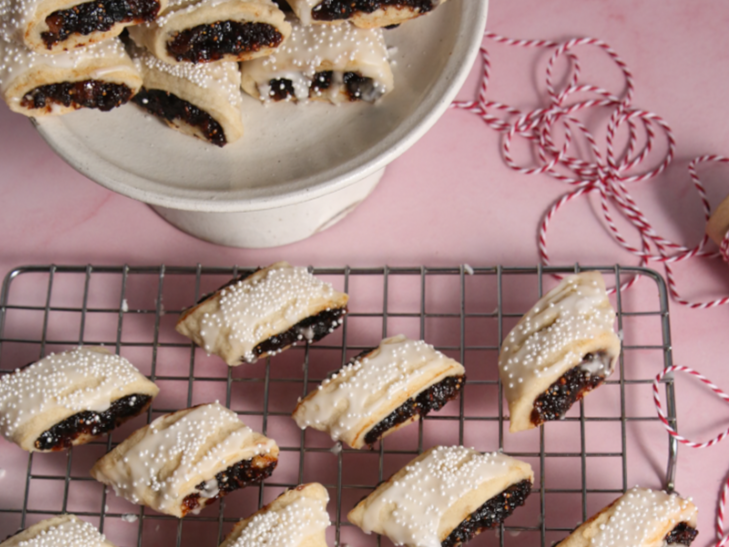
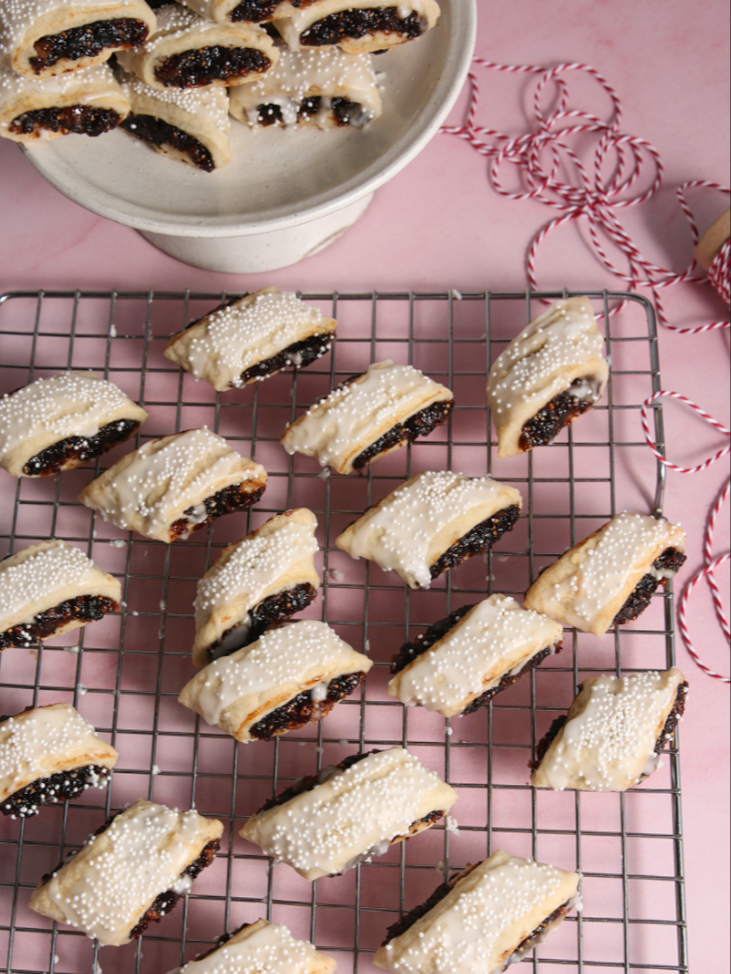
Fig Cookies!
When my friend, Mary Beth, mentioned that she wanted to have a St. Joseph Altar in her home, all I had to hear was that it involved baking cookies. I baked hundreds of fig cookies in addition to 1,000 individual altar cookies of varying flavors. The time spent baking with Mary Beth and her 92-year-old grandmother was priceless. I watched her grandmother's skilled hands delicately create cookies all day long. Her invaluable tips have been incorporated into my recipe. As we shared baking tips, they were surprised to discover that I add a touch of black pepper and a splash of red wine to my fig filling. Even more shocking was that I occasionally use pre-packaged refrigerated pie crust for my pastry dough. The pie crust creates a thin layer of dough around the fig filling. Traditional fig cookies have thicker dough with less filling. Give me more filling, please!
I've had plenty of practice making these delicate treats with my home made pastry dough and with pre-packaged pie crust. The amount of time I have to make these cookies usually dictates which pastry crust I'll use. It's nice to know that I get good results with pre-packaged pie crust when I am limited on time, but you just can't beat home made pastry dough.
Pastry dough is rolled into a rectangular shape and divided into three strips. Fig filling is then spread on each strip of dough.
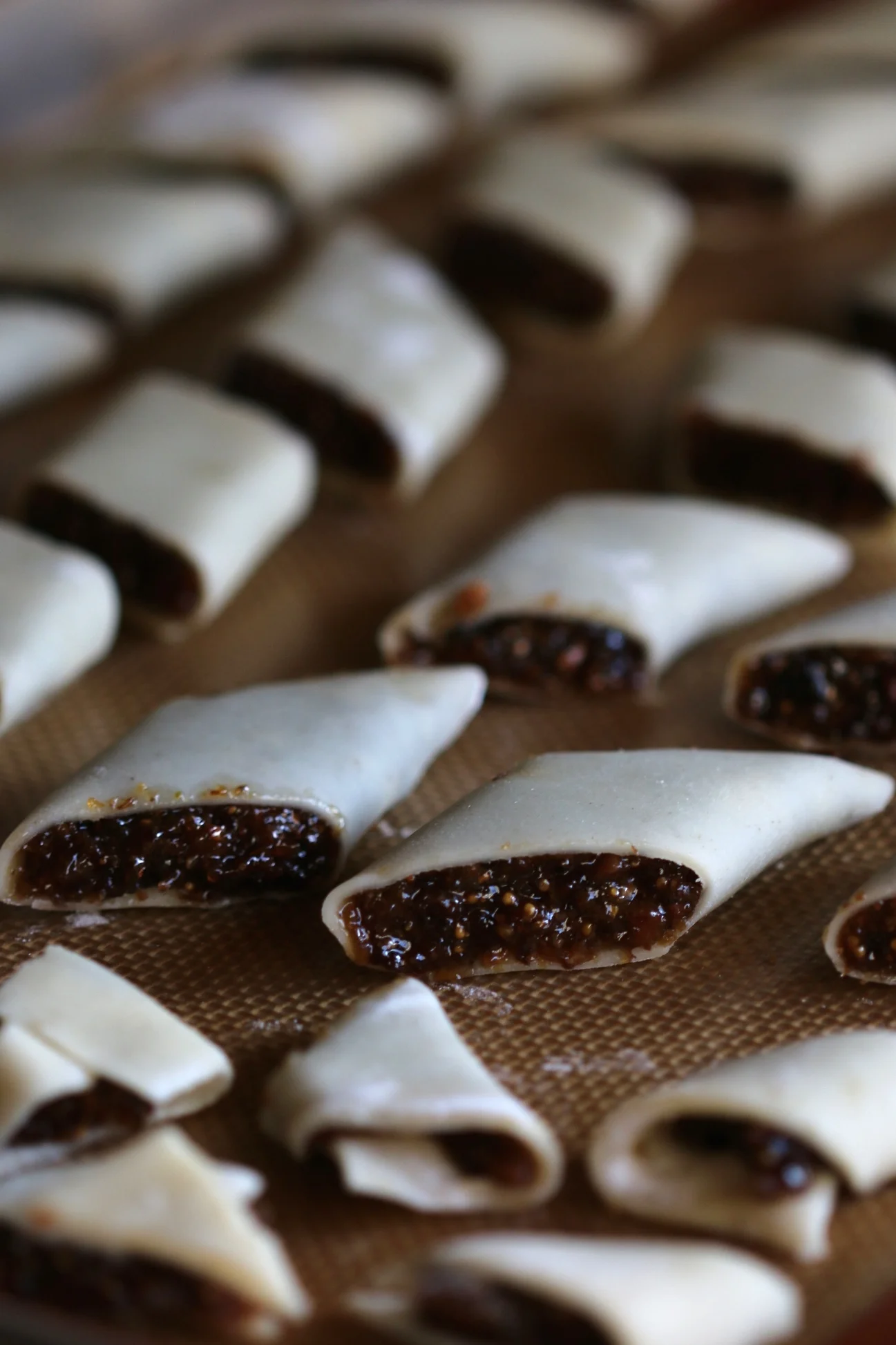
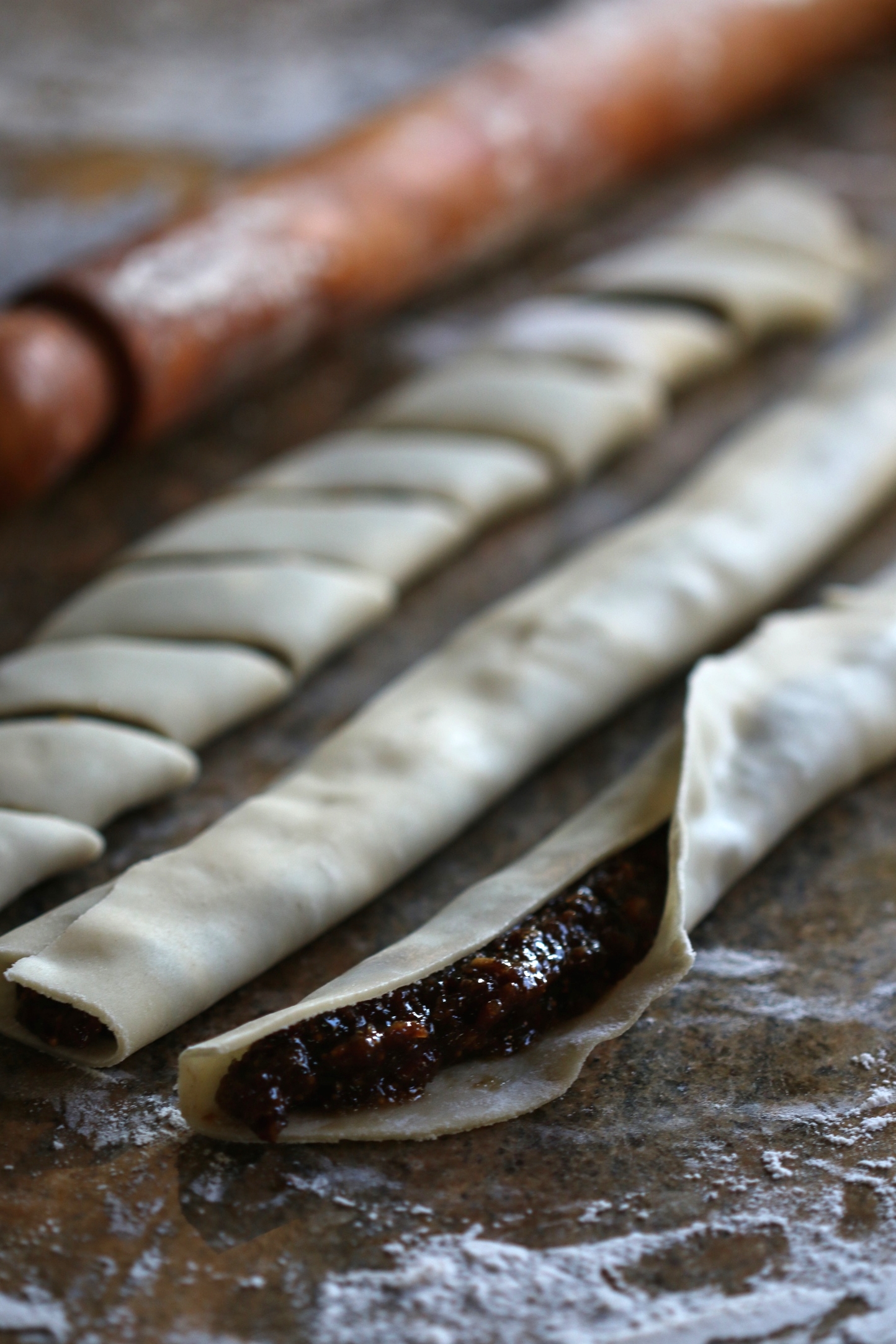
The dough is folded over the filling and moistened with water to create a seal with the overlapping dough. Cut into bite size cookies and placed on a baking sheet.
Bake the odd shaped end pieces, too.
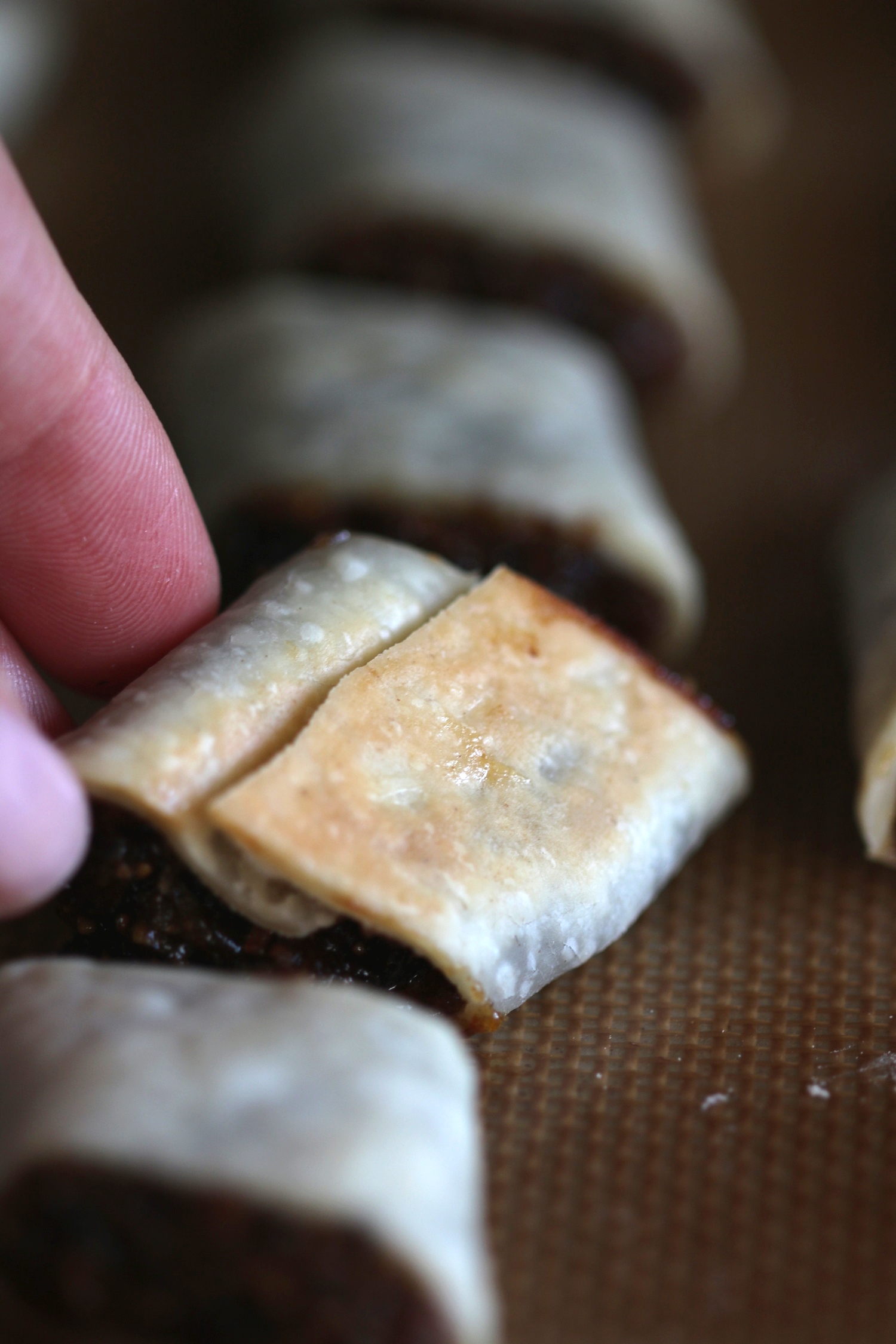
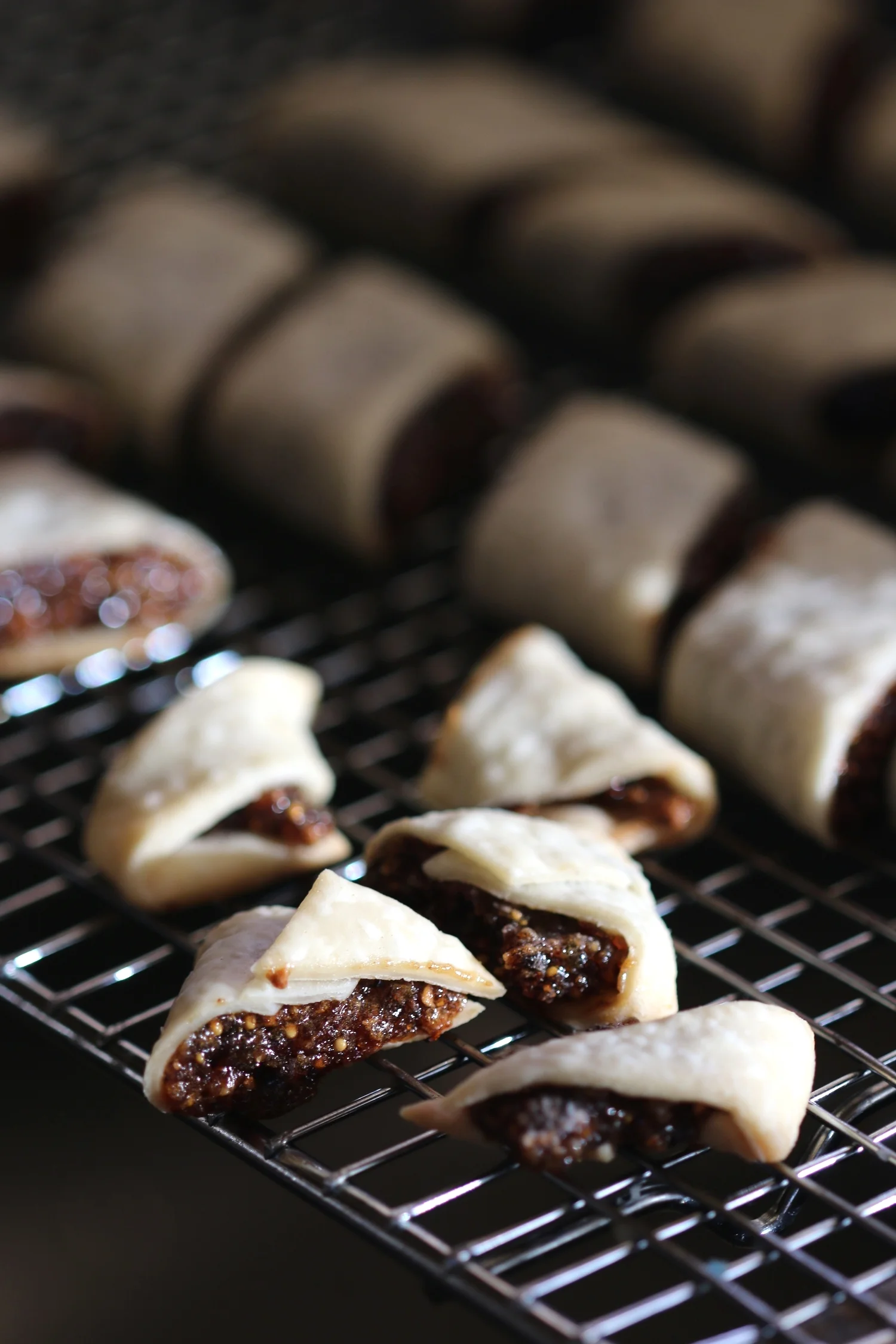
When the cookies are lightly brown on the bottom remove from the oven and place on cooling racks.
Drizzle the glaze onto the warm cookies and sprinkle with non pareiles and add them to your next cookie platter. The platter contains my toffee, sandies, and those brownies.
Fig Cookies
Servings: 3 1/2 dozen cookies
YvetteZunigaJemison.com
Filling
1/2 cup apricot preserves (pineapple or peach can be substituted)
1/2 cup fig preserves
1/2-pound dried figs, any variety, stems removed
1 cup raisins
1 tablespoons orange zest
1 1/2 teaspoons fresh ground cinnamon
1 tablespoon red wine (optional)
1/8 teaspoon black pepper
Pastry Dough
2 ½ cups all-purpose flour, plus more for work surface
1 teaspoon salt
1 cup chilled salted butter, cubed
½ cup cold water
1 tablespoon apple cider vinegar
Cookie Assembly and Glaze
pastry dough (recipe above)
fig filling (recipe above)
3 cups powdered sugar
5 tablespoons water
2-ounce bottle nonpareils
Special equipment: food processor, rolling pin
Filling
1. Place the apricot preserves and fig preserves, in the bowl of a food processor. Pulse a few times to loosen the preserves.
2. Add the figs, raisins, orange zest, cinnamon, wine and pepper into the processor bowl. Cover and pulse, stopping to scrape down the sides as needed, until the ingredients are spreadable with a slightly chunky consistency.
Pastry Dough
1. In a large bowl, whisk the flour, and salt together. Add the butter and toss to coat with the flour. Use your fingertips to flatten and rub the butter into the flour until a pebbly texture.
2. Stir the water and vinegar together and pour over the flour mixture. Blend until the dough forms. If necessary, add 1 tablespoon of water to incorporate the flour. Do not overwork the dough.
3. Gather the dough and press into a 1-inch-thick rectangle shape. Wrap in plastic wrap until ready to use.
Cookie Assembly and Glaze
1. Preheat your oven to 350°F. Line 2-3 baking sheets with parchment. Fill a small bowl with water to seal the pastry dough: set aside.
3. Generously dust your work surface and your rolling pin with flour. Roll the pastry dough into a 12x18-inch rectangle. As you roll the dough into this shape, occasionally lift the dough and sprinkle more flour under the dough onto the work surface to prevent it from sticking to the surface.
4. Cut the dough lengthwise into three equally long strips that are 4x18-inches long.
5. Work with one strip of dough at a time. Use the back of a spoon to spread 2/3 cup of the filling lengthwise, mounded along the center third of the strip of dough. There will be 1/3 of the plain dough to the left and right of the filling.
6. Carefully lift the dough on one side of the filling and snuggly fold it over the filling. Dip your fingertips in the bowl of water and rub your fingertips along the remaining strip of dough on the work surface to moisten it. Fold the moistened dough over the top, overlapping the pastry dough and gently and press down to seal.
7. Flip over the sealed dough with the seam side facing down. Use a thin sharp knife to cut crosswise into 11/4-inches long cookies. Set the cookies on the lined baking sheet, seam side down, about 1 inch apart. Repeat with the remaining dough and filling.
8. Bake one sheet pan of cookies at a time in the preheated oven until the cookies are slightly puffed and the bottom of the cookies are golden brown, 25-30 minutes.
9. Transfer the warm cookies to a wire rack to cool completely.
10. In a medium bowl, stir the powdered sugar and water together until smooth.
11. Work in small batches to glaze the cookies. Use a spoon to drizzle the glaze over 3-5 cookies at a time. Immediately sprinkle the nonpareils over the wet glaze. Continue glazing and sprinkling nonpareils on the remaining cookies. Allow the glaze to completely dry, about 2 hours before storing in an airtight container.
Do Ahead: The fig filling can be stored in zip top resealable bags up to 5 days in the refrigerator or 3 months in the freezer. Bring to room temperature before preparing the fig cookies.
The pastry dough can be tightly wrapped in plastic wrap and stored in the refrigerator up to 2 days or 2 months in the freezer. Bring the dough to room temperature before rolling out.
The fig cookies can be glazed and left to set for 2 hours and up to overnight. Loosely tent with foil and let set overnight.
Store in an airtight container, after the glaze has set, up to one week. To freeze, layer between sheets of wax paper in an airtight container. Freeze up to 1 month. Thaw and serve.